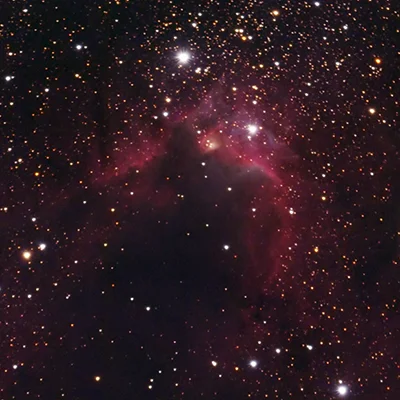
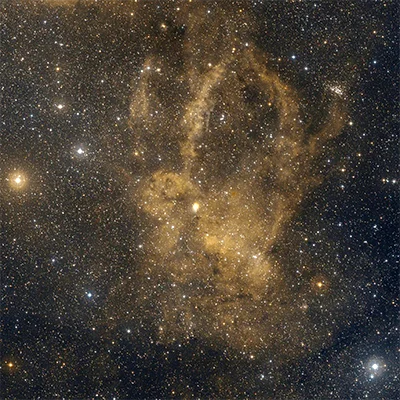
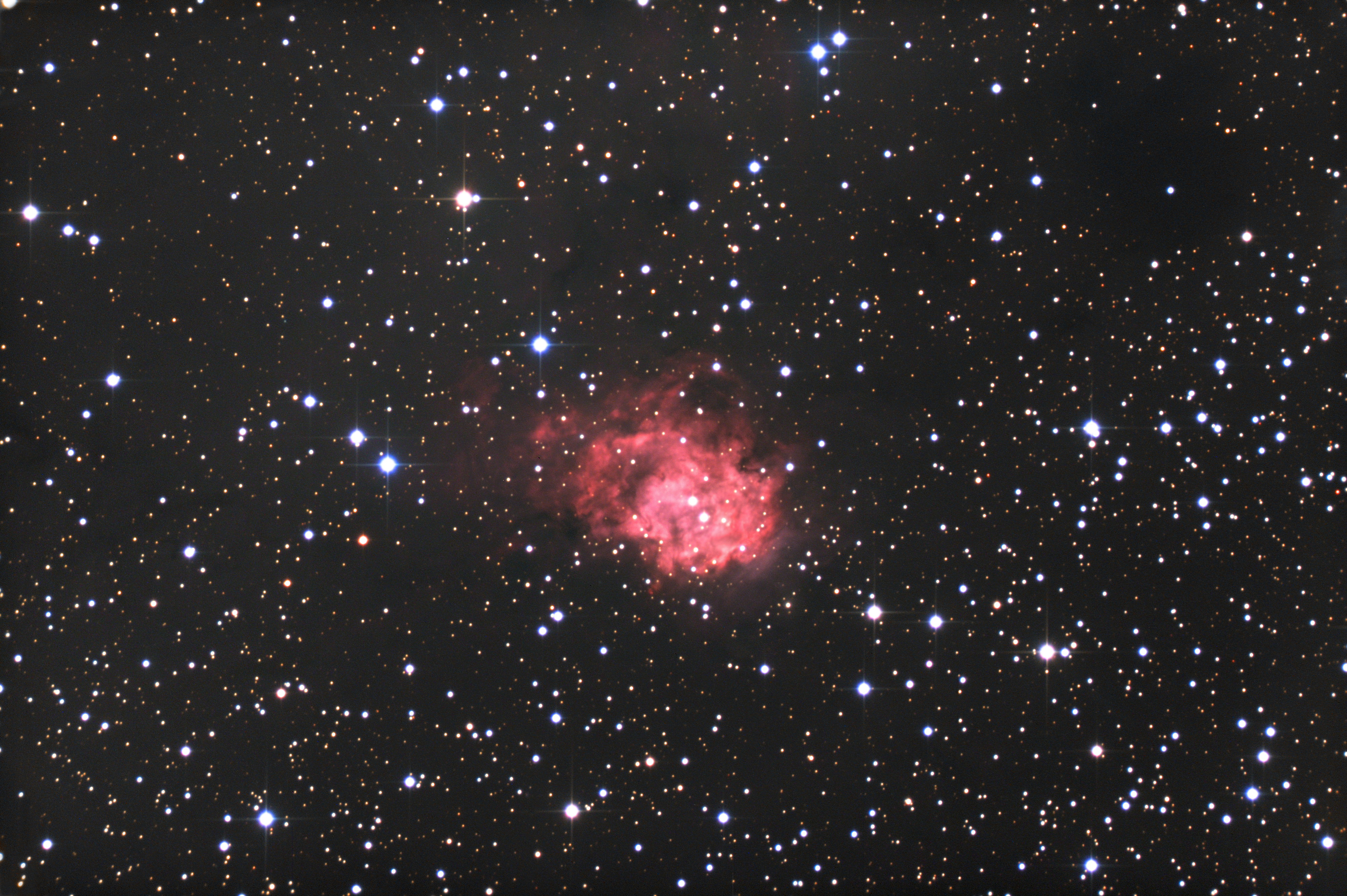
Cluster with Nebula NGC 7538
History
NGC 7538 was discovered on 3 November 1787 by the German-British astronomer Friedrich Wilhelm (William) Herschel with his 18.7 inch reflecting telescope. [277] He described it as «very faint, large and embedded with two fairly bright stars». [313]
In 1946 the German astronomer Rudolph Minkowski published a list of emission nebulae (mostly planetary nebulae) which he discovered on photographic plates exposed by William C. Miller with the 10 inch telescope at Mount Wilson Observatory. There he classified Min 1-102 as a diffuse one or strange nebula. [397]
In the 1950s, the American astronomer Stewart Sharpless, while scanning the Palomar Observatory Sky Survey photo plates made with the 48 inch Schmidt telescope, found emission nebulae on NGC 7538 and recorded it as Sh 2-158. He published 1959 his catalog of 313 H-II regions. [310]
Physical Properties
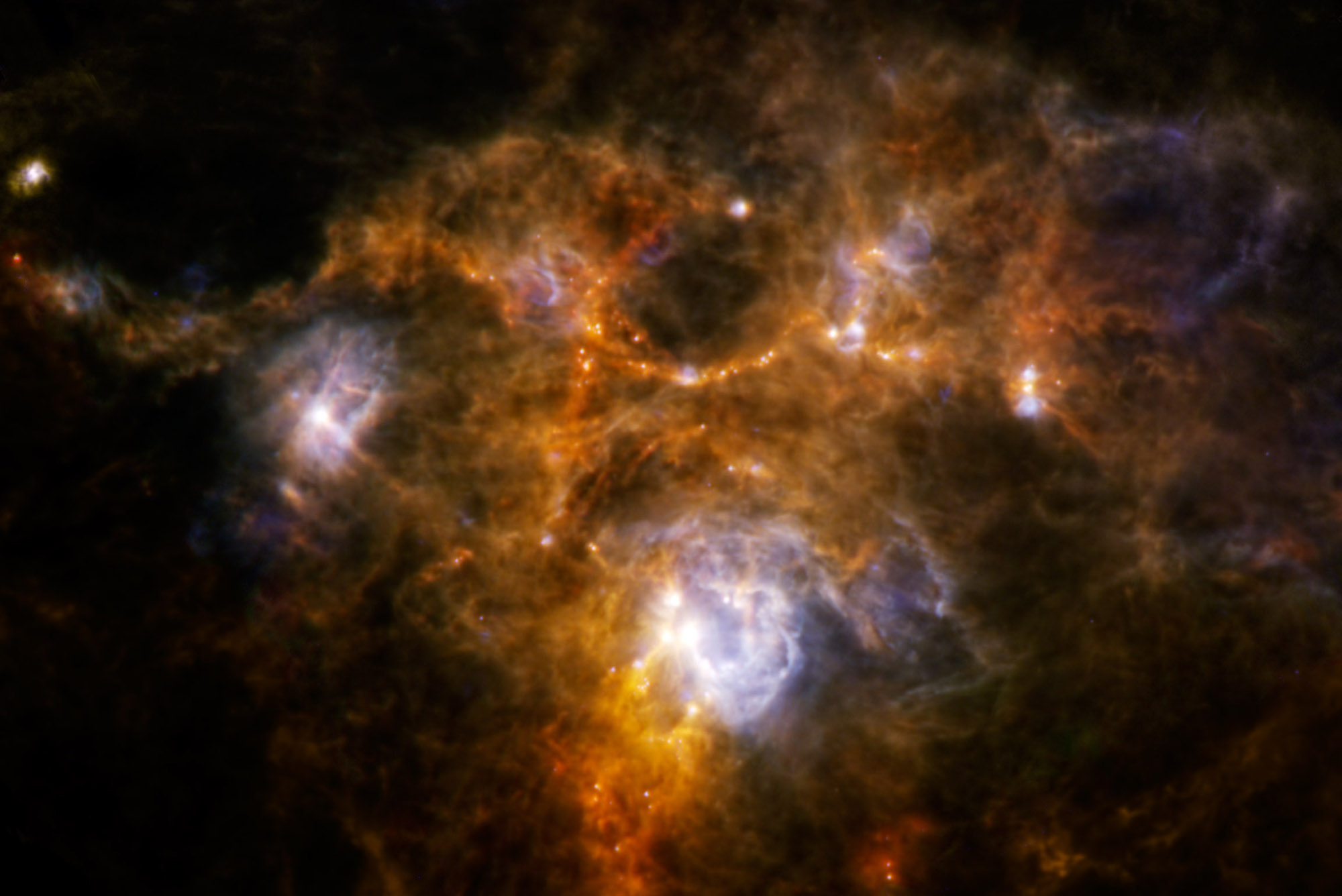
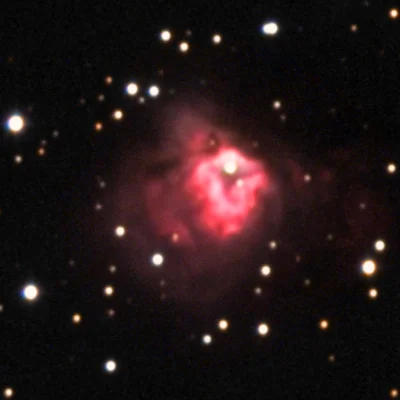
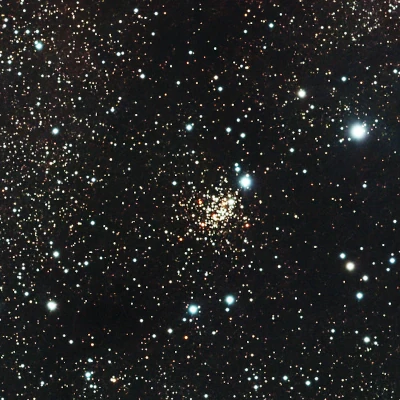
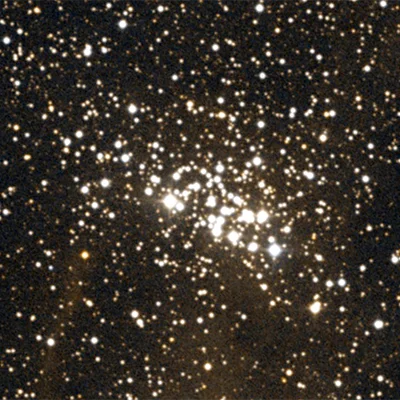
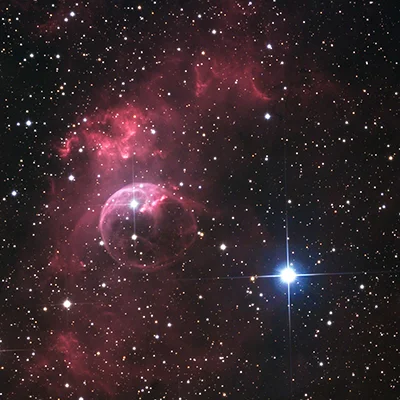
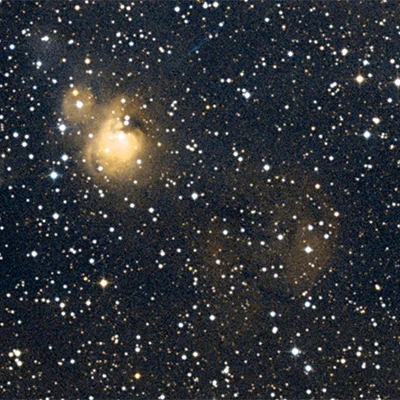
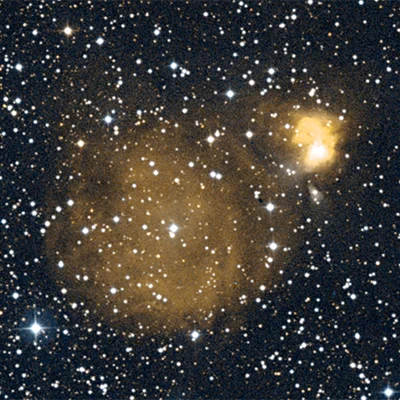
NGC 7538 is a star cluster involved in emission nebula SH 2-158, which is the brightest part of a much larger and fainter H-II region Sh 2-161 that extends to Bubble Nebula NGC 7635. The distance of NGC 7538 is about 2.44 kpc (~ 7900 light years). [145] The nebula consists mostly of hydrogen gas, but also contains cosmic dust that glows brightly in the far-infrared spectrum. With a total mass of about 400'000 times that of our Sun, the nebula is an active star factory, especially for large stars with more than eight solar masses. Hundreds of protostars are scattered throughout the nebula. Once they reach critical mass, nuclear fusion ignites and they begin to glow as stars. Thirty of these protostars have a mass greater than 40 solar masses and are very cold: only a few tens of Kelvin. A group of such stellar seeds line up along an annular structure that could be the edge of a bubble. Measuring 25 x 35 light-years, this oval ring is made of cold dust. Its mass is estimated at about 500 solar masses. This bubble could have originated from stellar winds or a supernova explosion from an earlier population of very hot and massive stars, but no such remnant has been found at the centre of the ring. [406]
According to one hypothesis, these ring structures could also be «runaway» O or B stars, which formed here and migrated or passed through the area. The most likely candidate for this is the star V808 Cassiopeiae (BD +61 2408), a B3e star with about eight solar masses and a surface temperature of about 20'000 Kelvin. It is located about 36 arc minutes in the direction of 22° from NGC 7538, or a distance of 153 pc, and is receding from the north ring at a speed of 62 km/s. It could have been inside the nebula 2.4 million years ago and caused the rings that took about the same time to form. [407, 408]
| Name | Type | RA (J2000.0) | Dec (J2000.0) | PM [mas/y] | Parall. [mas] | Rvel [km/s] | z | Size ['] | Magnitudes | Identifiers |
|---|---|---|---|---|---|---|---|---|---|---|
| NGC 7538 | OpC | 23h 13m 37s | +61° 30' 00" | -2.4 | -64.9 | -0.000216 | 2E 2311.3+6113; 2E 4700; Ced 209; GAL 111.54+00.78; GRS G111.50 +00.80; IRAS 23113+6113; IRCO 1141; LBN 111.58+00.77; LBN 542; Min 1-102; NGC 7538; RAFGL 3048; SH 2-158; Villafranca O-013; [KPS2012] MWSC 3707; [WWB83] G111.54+0.78 | |||
| Sh 2-159 | Y*O | 23h 15m 31s | +61° 07' 10" | -4.136 | 0.1505 | 1.273 × 1.07 | G 16.812288; J 9.601; H 8.248; K 7.159 | 2MASS J23153120+6107110; 2MASX J23153127+6107104; AKARI-FIS-V1 J2315292+610722; AKARI-IRC-V1 J2315313+610713; BGPS G111.615+00.374; BGPSv2 G111.609+00.376; F3R 3433; GAL 111.62+00.37; GPSR 111.612+0.374; Gaia DR3 2014172746510194304; IRAS 23133+6050; IRCO 1162; JCMTSE J231531.3+610713; JCMTSF J231531.3+610713; KR 77A; LBN 111.67+00.33; LBN 543; MSX6C G111.6115+00.3735; NVSS J231531+610709; RAFGL 3053; SH 2-159; TIC 377898083; WB89 261; WISE J231531.36+610708.9; WISEA J231531.33+610709.4; WN B2313.3+6051B; [BNM96] 111.612+0.373; [ERG2015] 7872; [GSL2002] 112; [HLB98] Onsala 182; [KC97c] G111.6+00.4; [KCW94] 111.61+00.37; [KCW94] 111.612+00.374; [L89b] 111.612+00.374; [LRL2001] 10; [LRL2001] G111.61+0.37; [MO2001] 82; [SFA2014] Cloud S159; [SSS2011] BGPS G111.615+0.374; [THW2006] G111.61+00.37; [THW2006] G111.612+00.374SMM; [WWB83] G111.62+0.37 | ||
| Sh 2-161 | HII | 23h 15m 29s | +61° 51' 43" | SH 2-161 |
Finder Chart
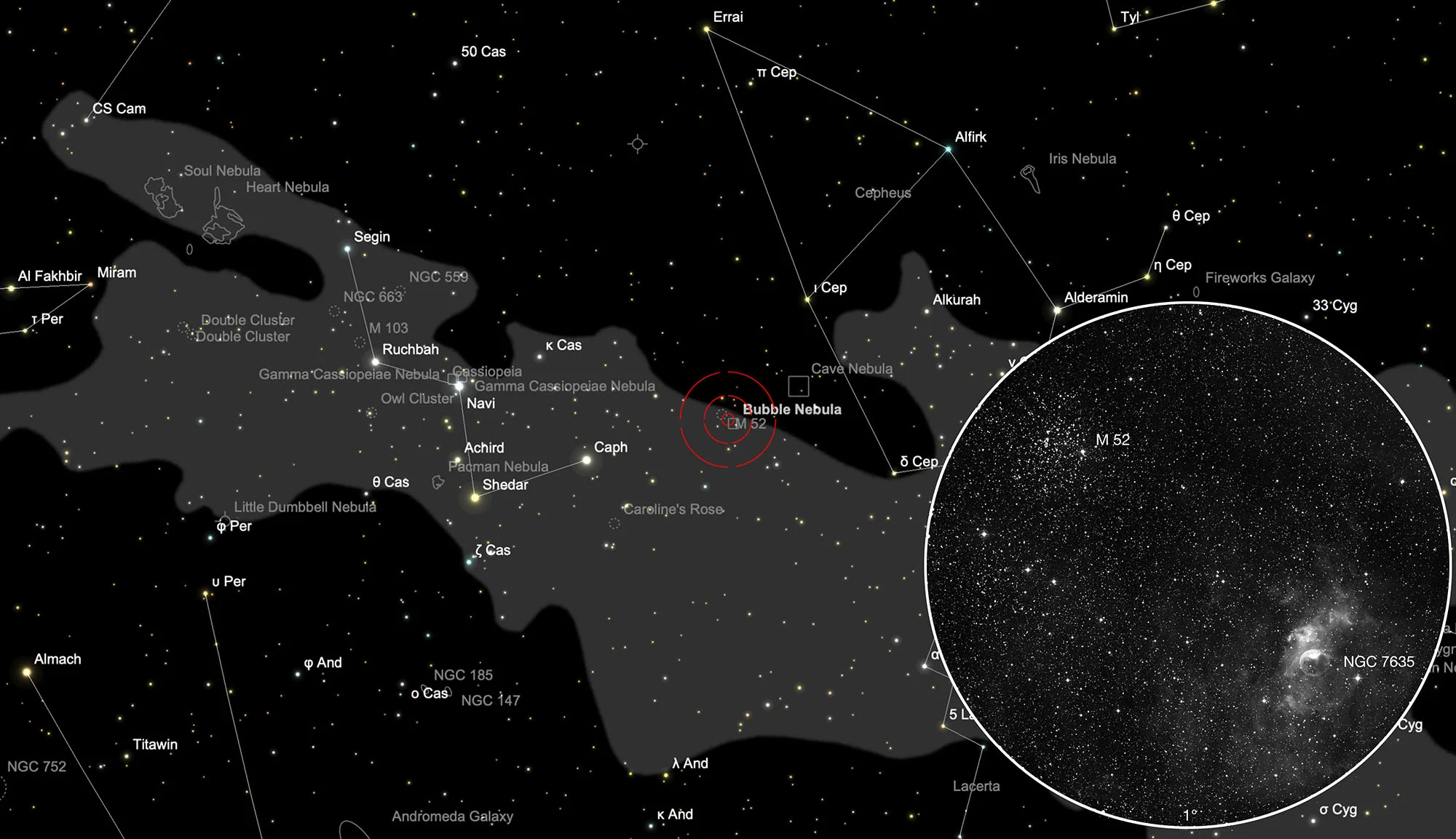
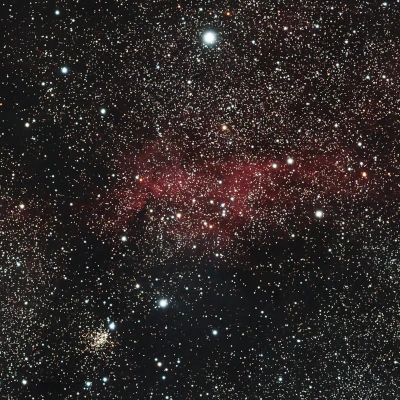
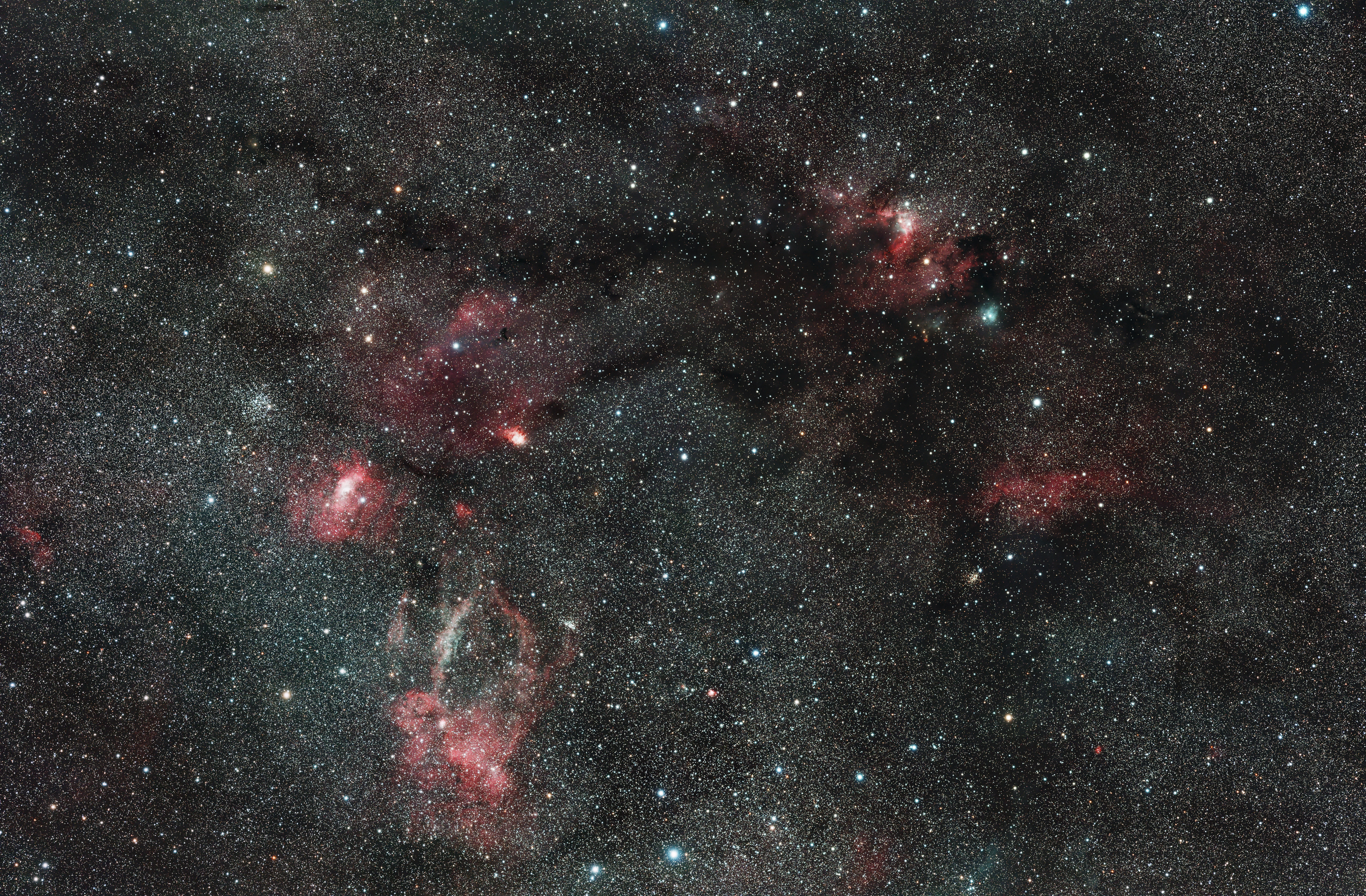
The galactic nebula NGC is located in the constellation Cepheus in the direction of Cassiopeia, about 1° 20' west of the open star cluster Messier 52 at the same declination, or about 1° west and 20' north of the NGC 7635. On 10 September it is in opposition to the Sun and crosses the meridian at local midnight. The best observation time is around May to February, when the circumpolar constellation is at its highest at night.