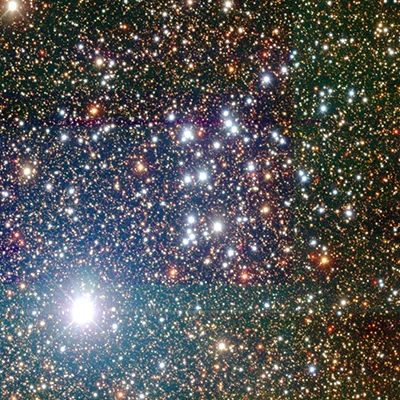
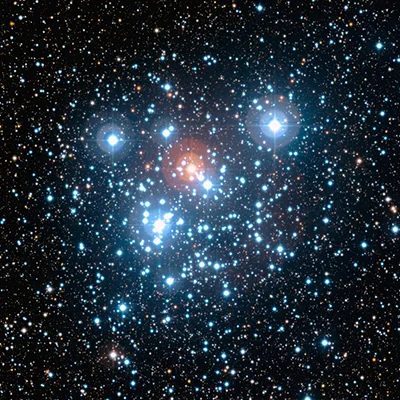
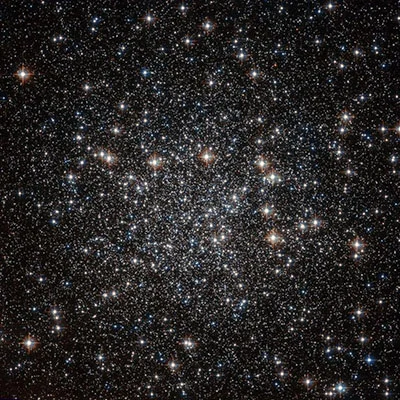
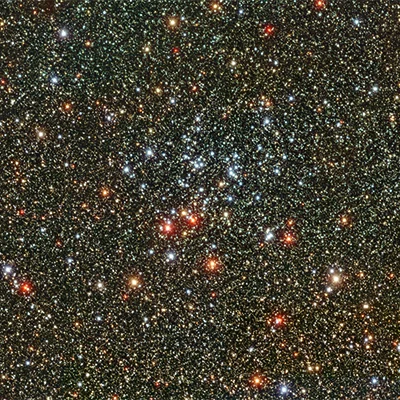
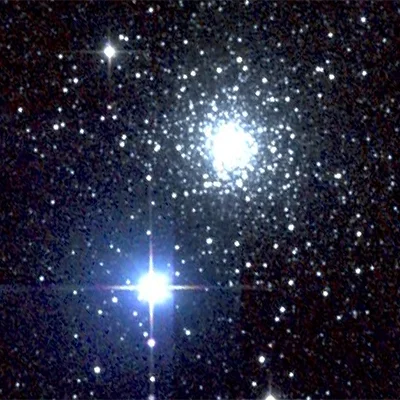
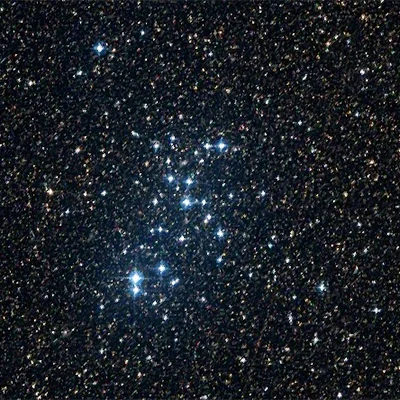
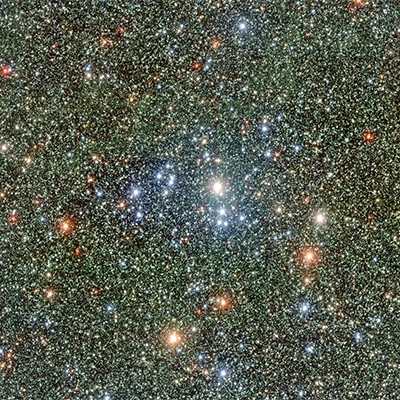
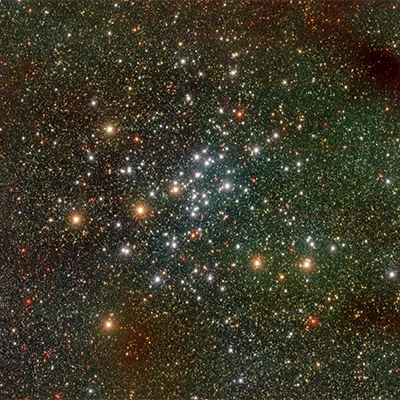
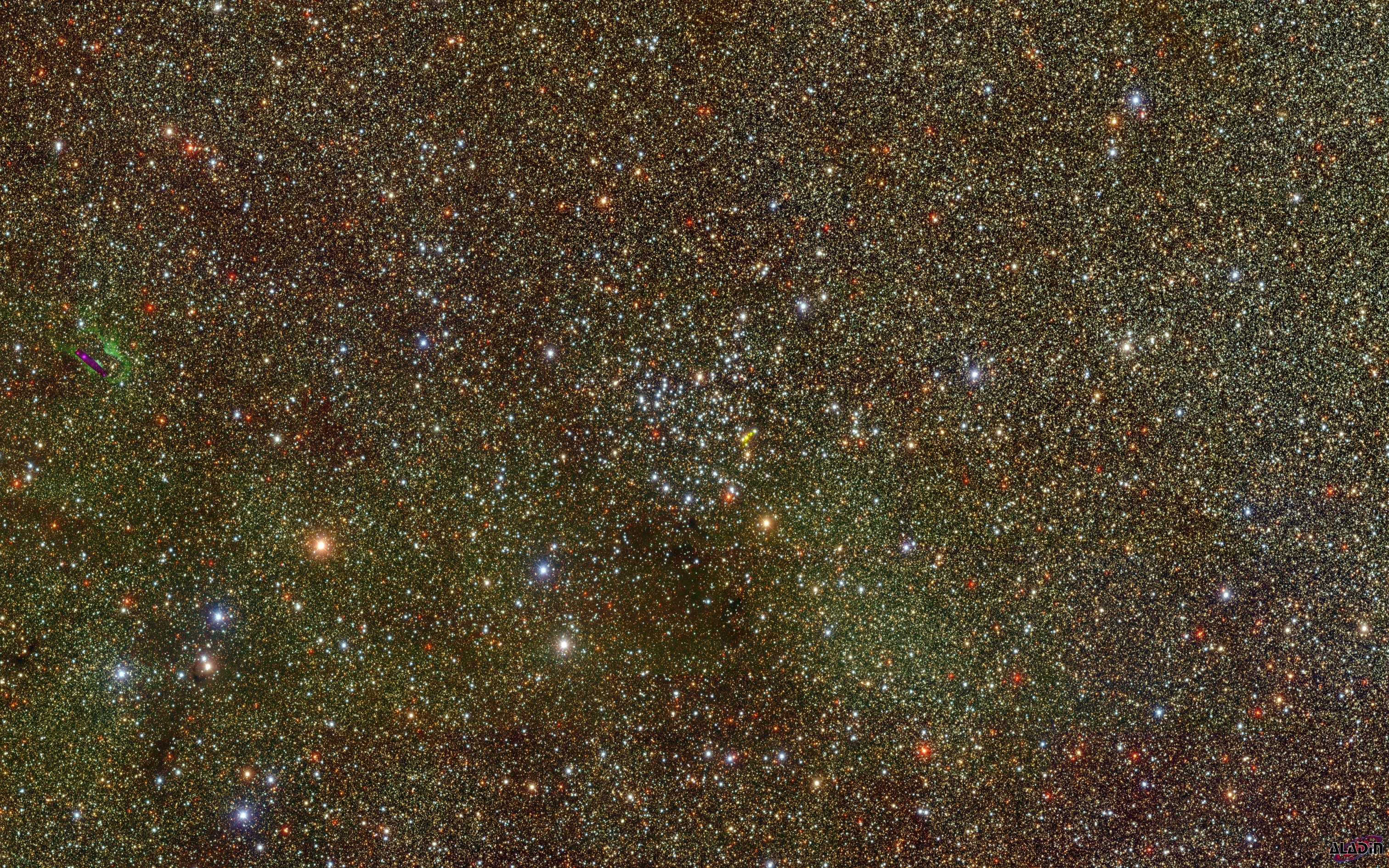
Open Cluster NGC 5823
History
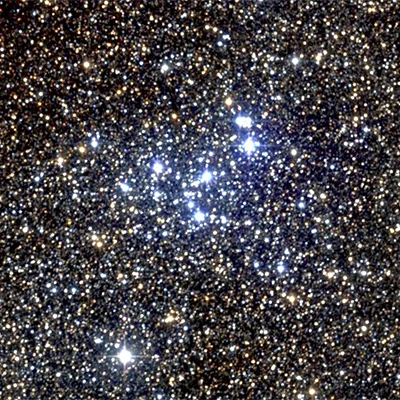
This cluster was discovered by James Dunlop on 8 May 1826 while observing with his 9-inch speculum reflector from Parramatta, NSW. He listed it as Δ 351. The summary description based on two observation reads: «A pretty large cluster of small stars resembling faint nebula, general figure round, south preceding 2 Pysidis.» [50]
John Herschel, unaware of Dunlop's discovery, listed this cluster as h 3589 and observed it once in April 1836 (sweep 694) from South Africa and noted: «Cluster VII. class; a fine large cluster of separate stars 13...14 mag, 10' diameter; not much compressed in the middle; nearly fills the field» [11]
Physical Properties
| Designation | NGC 5823 |
| Type | OCL (III2m) |
| Right Ascension (J2000.0) | 15h 05m 30.5s |
| Declination (J2000.0) | -55° 36' 13" |
| Diameter | 12 arcmin |
| Visual magnitude | 7.9 mag |
| Metric Distance | 1.192 kpc |
| Dreyer Description | Cl, cL, Ri, lCM, st 13…14 |
| Identification, Remarks | h 3589; GC 4032; OCL 936; ESO 176-SC11 |
Finder Chart
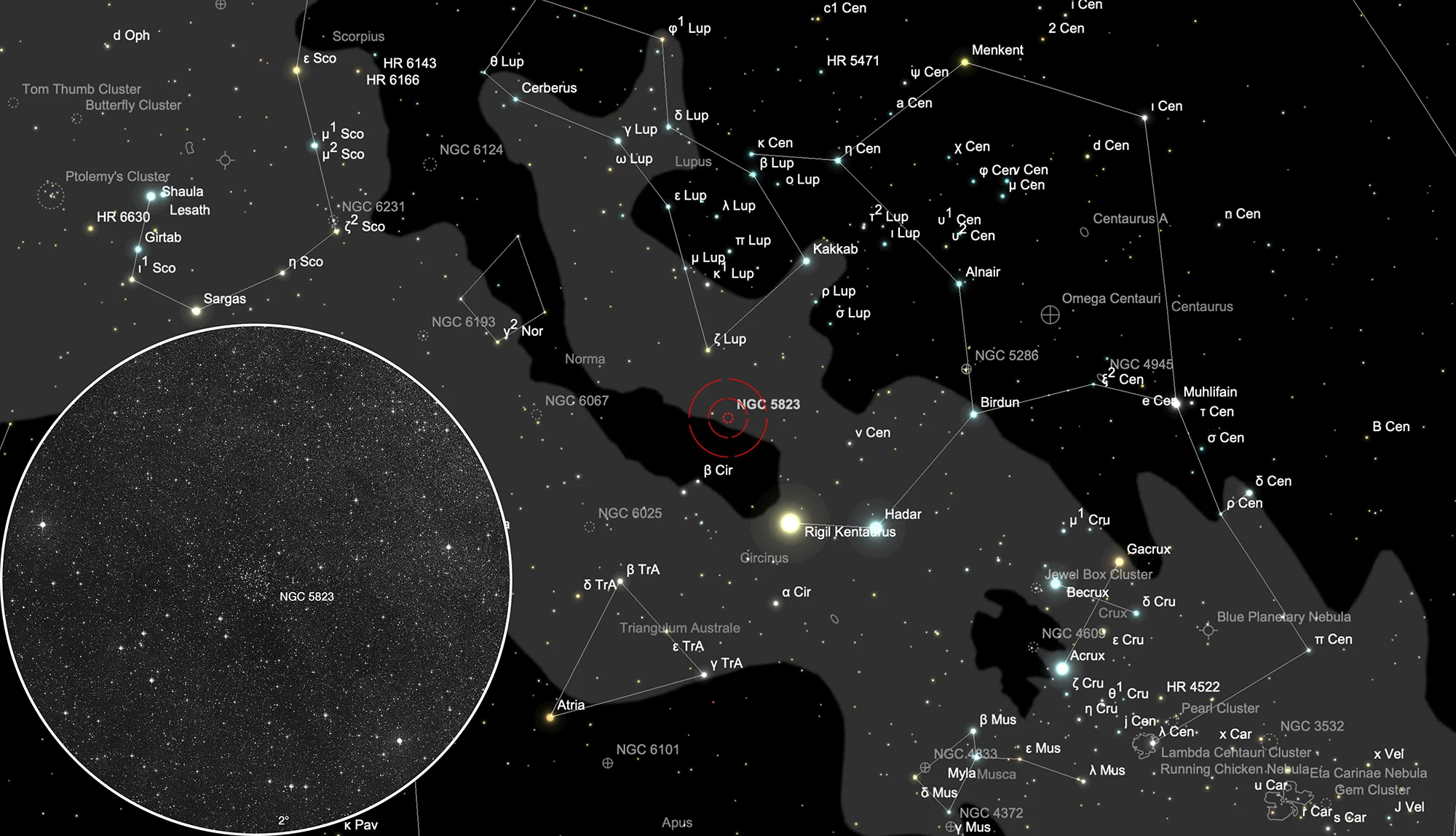
The open cluster NGC 5823 is located in the constellation Circinus. Unfortunately it is not visible from Europe. On 9 May it in opposition with the Sun and is therefore highest in the sky at local midnight.